
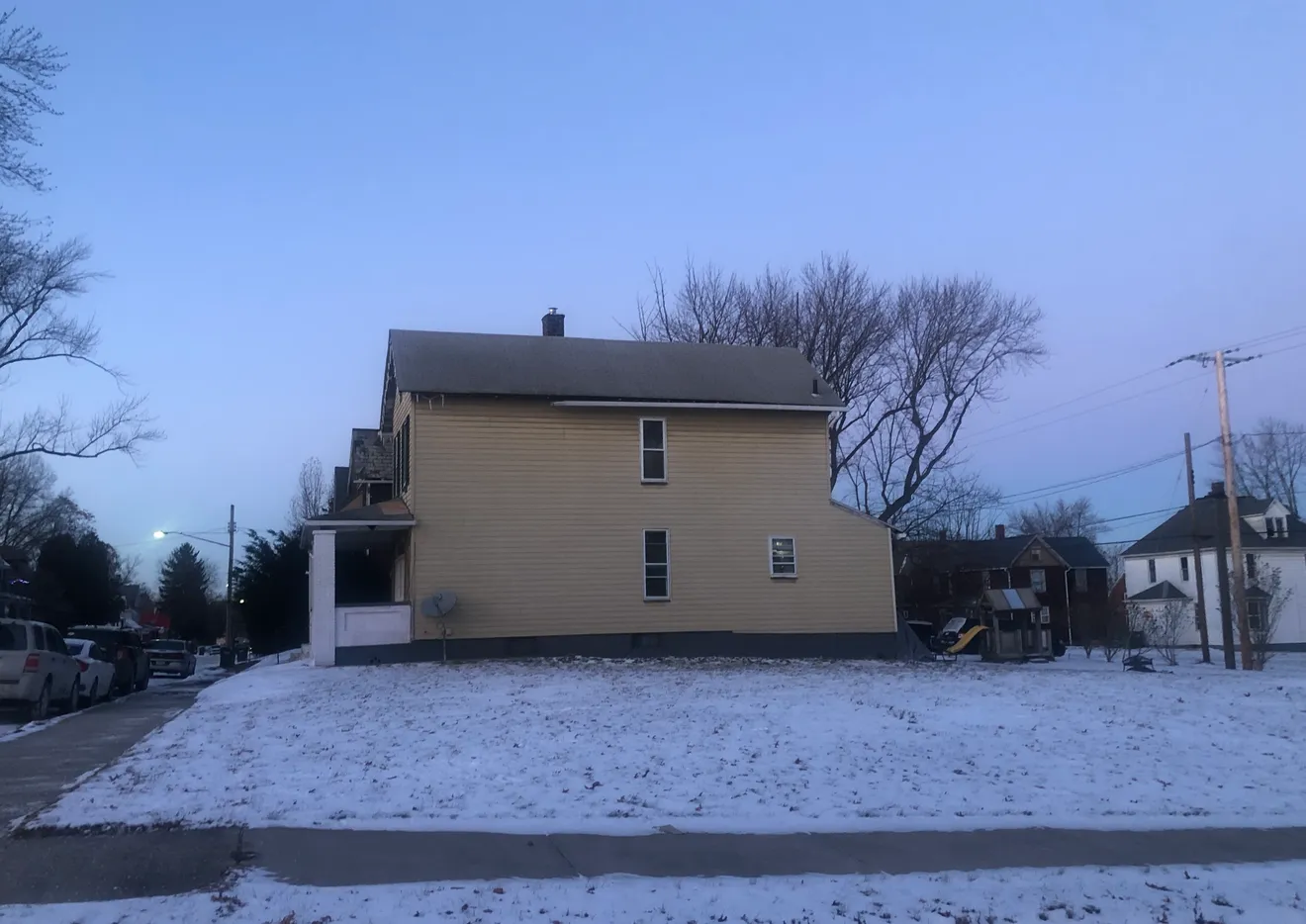
Canton Repository (1/27/26) The people behind the Shorb revitalization in Canton have similar intentions for the Carnation City.
Build Ohio plans to build 10 new, single-family houses in the Liberty Heights area in 2026 on Alliance’s north side.
The homes will be built on reclaimed lots owned by the city.
The infill project aims to create affordable houses that the city severely lacks, multiple officials said. The effort will target low-income neighborhoods in Ward 2. The average price will be $200,000, but organizers will be securing $50,000 to $60,000 in subsidies as a down payment to give families equity.
Ground is expected to be broken in March for the first five houses. Then five more, and even more in 2027.
Mayor Andy Grove said the city’s administration “fully supports” the project.
“Creating 10 new, affordable housing units and employment for our skilled labor, all while stimulating population growth is exactly the direction we are heading in 2026,” Grove said.
The Liberty Heights area includes Liberty, Seneca and Freedom streets. It is not the apartment complex of the same name.
The project is not expected to compete with Alliance Area Habitat for Humanity, which also builds homes for lower income families, and its mission. But they work in tandem and partnership with the organization.
Let’s take a look at the stakeholders, and the purpose for this project:
The Liberty Heights project involves civic and nonprofit partnerships
Build Ohio is a new joint venture between Canton For All People and the Youngstown Neighborhood Development Corporation. Both specialize in neighborhood revitalization programs.
For example, Canton For All People is behind the Newton Family Apartment complex in Canton, which nears completion. The complex will have 52 affordable units for families, and an important place in the Shorb neighborhood.
The project in Alliance also involves the Greater Alliance Foundation, Alliance Area Development, Alliance City Council and Grove’s office. The Lemmon and DeHoff family foundations also are involved with Build Ohio. All are funding sources.
“It’s not going to solve Alliance’s problem but it is a start and it’s going to lead to a lot more things,” said Don Ackerman, executive director of Canton For All People and lead pastor of Crossroads United Methodist Church in Canton.
According to the Greater Alliance Foundation, the approach for this partnership includes:
- A mix of new construction, home rehabilitation and multi-family options to support stable, mixed-income neighborhoods.
- New homes that build equity and strengthen neighborhood values.
- Renovation of existing homes for households that earn 30% to 60% of the area’s median income.
- Owner-occupied repair programs that help current residents remain in safe, secure homes.
- Expanded housing counseling, financial education and development support for long-term family stability.
- Flexible systems to meet urgent needs and shifts in the local housing market.
Rick Baxter, president of Alliance Area Development and Alliance Area Chamber of Commerce, played a key role in bringing all parties together, helping align interests and move the project forward.
“Bill Lemmon was a former banking client of mine when I was in banking, and I ran into Bill,” Baxter said. “Bill’s like, ‘You need to meet Don.’ That’s kind of how we got started.”
Blighted houses, now demolished, were once on these lots
For 25 years, city officials have engaged in an aggressive program to remove blighted properties. They have demolished 421 properties since 2020, and spent nearly $4 million on the demolition program.
The lots for the Liberty Heights project come from the demolition program. The city has identified 11 parcels for infill builds. Infill means new construction on vacant or underused lots within an urban area.
Baxter said there are places for housing developments on the outskirts of Alliance, but the inner-city doesn’t have the space for larger subdivisions.
“Alliance doesn’t have a block of 25 acres that you can develop. We have to do it like this because that’s where the land is,” he said.
The 11 addresses are:
- 970 S. Seneca Ave.; 1013 S. Seneca Ave.
- 947 S. Liberty Ave.; 959 S. Liberty Ave.
- 625 Milner St.; 727 Milner St.
- 1024 S. Freedom Ave.; 1034 S. Freedom Ave.; 1125 S. Freedom; 1325 S. Freedom; and an unmarked lot on South Freedom.
The Liberty Heights project will target 10 of these lots for new builds in 2026.
The city plans to transfer lot ownership to the partnership. It also plans to provide a $100,000 grant, and waive certain fees to start the Liberty Heights project.
To make it happen, City Council received three pieces of legislation on Jan. 20 for consideration. There will be a formal presentation in February before any vote.
Ackerman and Heidi McClung, executive director of Greater Alliance Foundation, credited the city’s demolition program for preparing these sites for new construction.
“Alliance did it the right way,” Ackerman said. “There were times in other communities, in previous years, where basements and rubble were left underneath the ground. That does not appear to be the case in Alliance.”
McClung mentioned the city’s former planning and development director and health commissioner by name, citing their work on the demolition program. Both are now retired.
“We are proud to provide seed funding from our donor family to build on this momentum and carry forward the work of Joe Mazolla and Randy Flint, who worked diligently over the last 25 years to prepare our neighborhoods for a brighter future,” McClung said.
Baxter says the houses will be quality, ‘the way they used to be built.’
The stakeholders in this project say the homes will be quality builds.
“One of things I just love, having gone out to see some of the houses that they’ve built, is they build the old school way, where you have a nice front porch and it’s very welcoming,” Baxter said. “It’s houses, the way they used to be built.”
Ackerman said they specialize in neighborhoods that “haven’t had a whole lot of investment” to uplift communities, meant to “restore the social fabric of a neighborhood.” For example, he said the Shorb project in Canton led to a grocery store and neighborhood events.
“We got a gal in the neighborhood who volunteered, and she’s getting training, to start a neighborhood association (on Shorb). We’re excited about that,” Ackerman added.
He said he hopes the Alliance project will create the same synergy, and attract similar improvements on the city’s north side.